

With the paleo diet gaining a lot of traction in the US, I’ve been getting more and more questions about ghee. For those of you unfamiliar with this product, ghee is basically butter with its milk solids removed.
Like butter, ghee is made from the fats of whole milk. Buffalo milk is often used in the making of Indian ghee.
So if ghee is basically the same as butter, what’s all the fuss?
Well, folks, I’m so glad you asked!
Ghee vs. Butter
Smoking point. Ghee has a higher smoke point than butter. The point when oil starts to smoke isn’t only stinky, but it’s when fat reaches these high temperatures that its compounds can be damaged. This matters because heating fats above their smoking point is not good for our health. Ghee has a smoking point of 400-500 degrees, whereas butter begins to smoke somewhere between 325 and 375. When you’re doing a lot of cooking at high heat, ghee is a much better option than butter.
Taste. While butter is a delicious fat, ghee tends to have a deep, nutty taste that is very satisfying. If you make your own, you’ll end up with a house that smells like freshly baked croissants, which, as far as I’m concerned, is another bonus!
So, if you’re looking for a tasty topping for sweet potatoes or a fat with a nice flavor profile to sauté your vegetables in, reach for the ghee! You can buy it at any Indian market, and more and more supermarkets are carrying it now, too (hint: look in the international aisle).
Here’s your Trick:
Since there are no milk solids left in ghee, it will last for a very long time. You can store it at room temperature, but to prolong its life (for months and months, if you can go that long without using it!), store it in the refrigerator.
And your Tip:
If you’re going to make your own ghee, make it with organic, grass-fed, unsalted butter.
And your Recipe:
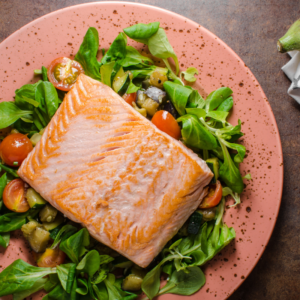
Citrus Dill Salmon Salad
Ingredients
- 1 1/2 pounds skinless salmon cut into 4 fillets
- 2 tablespoons ghee melted
- 1 tablespoon lemon juice
- Sea salt and freshly ground black pepper to taste
- 1 head Romaine lettuce or other leaf lettuce
- 1 small red onion sliced
- 1 small cucumber sliced
- 1 cup halved cherry tomatoes
- 1/4 cup olive oil
- 2 tablespoons cider vinegar
- 1/2 teaspoon dried dill
- Pinch onion powder
- Pinch sea salt
- 1 clove garlic pressed
Instructions
- Preheat oven to 350 degrees. Rinse salmon and pat dry. In a small bowl, combine ghee and lemon juice then brush evenly over salmon; season with salt and pepper. Bake for 6 to 10 minutes or until fish flakes easily when tested with a fork. In a large bowl, toss together lettuce, onion, cucumber and cherry tomatoes. In a small bowl, whisk together remaining ingredients (olive oil through garlic). Arrange salad on dinner plates and top with a salmon fillet; drizzle with vinaigrette.
Notes
PS–You can receive delicious menus (complete with shopping lists!) like this delivered right to your email inbox by subscribing to Dinner Answers today!